This year marks the sixth time that the Africa Research Institute of Óbuda University and Stellenbosch University – one of South Africa’s leading higher education institutions – are co-hosting the conference titled “Counter-Terrorism, Technology, and Development in Africa.”
This year’s theme is: “A Changing World Order and Africa.”
More than 30 presentations across three panels, delivered by speakers from around the world, will be available to watch – and interact – online on September 30. The conference booklet, available for download via the link below, include not only the program and links but also, among other things, the abstracts and brief biographies of the presenters.
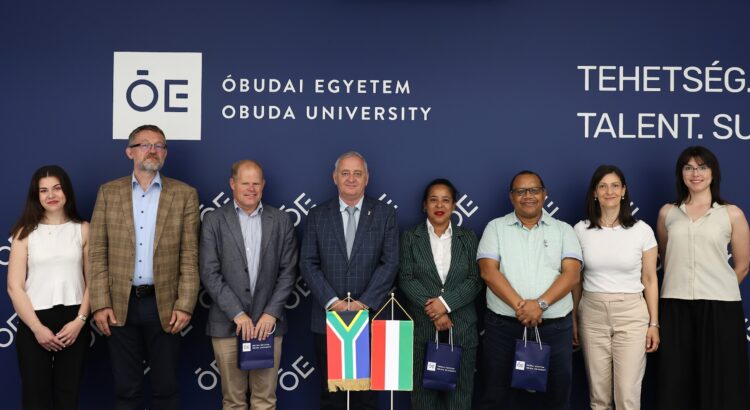
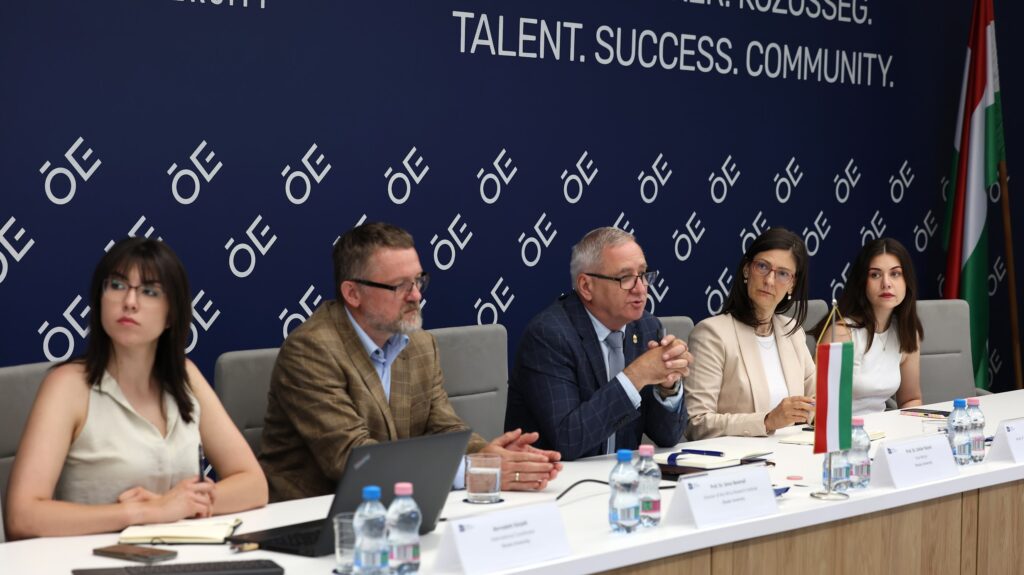
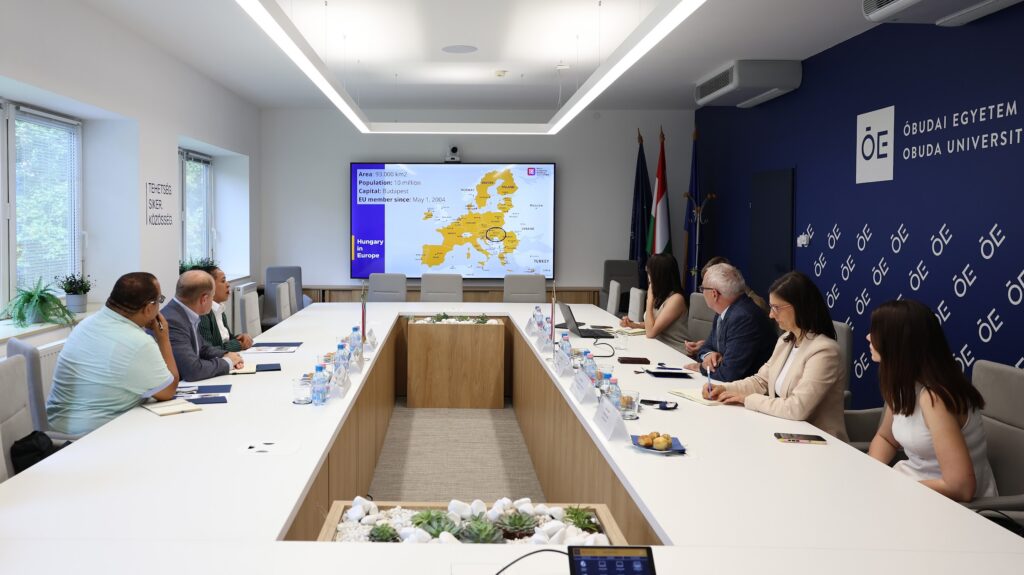
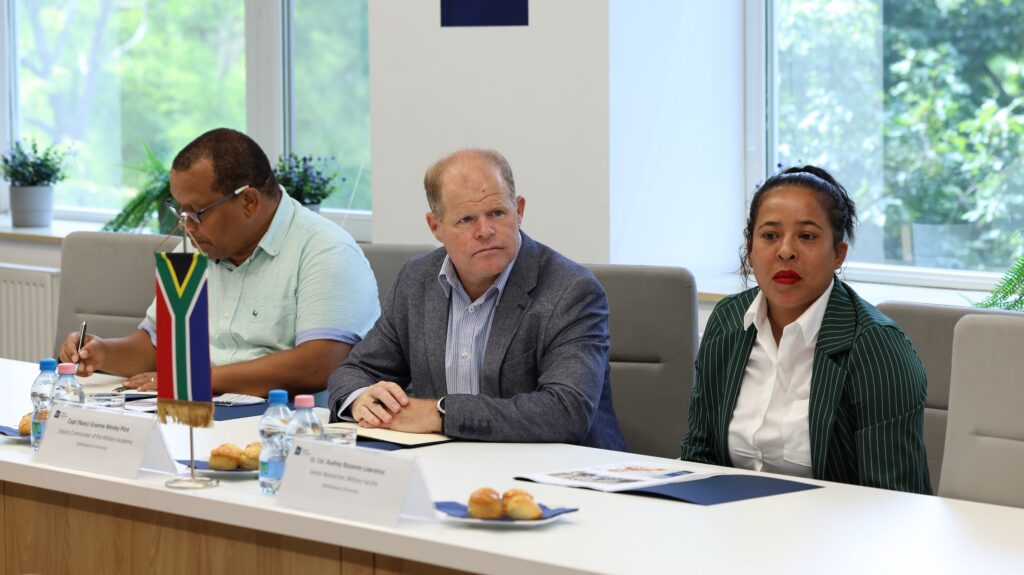
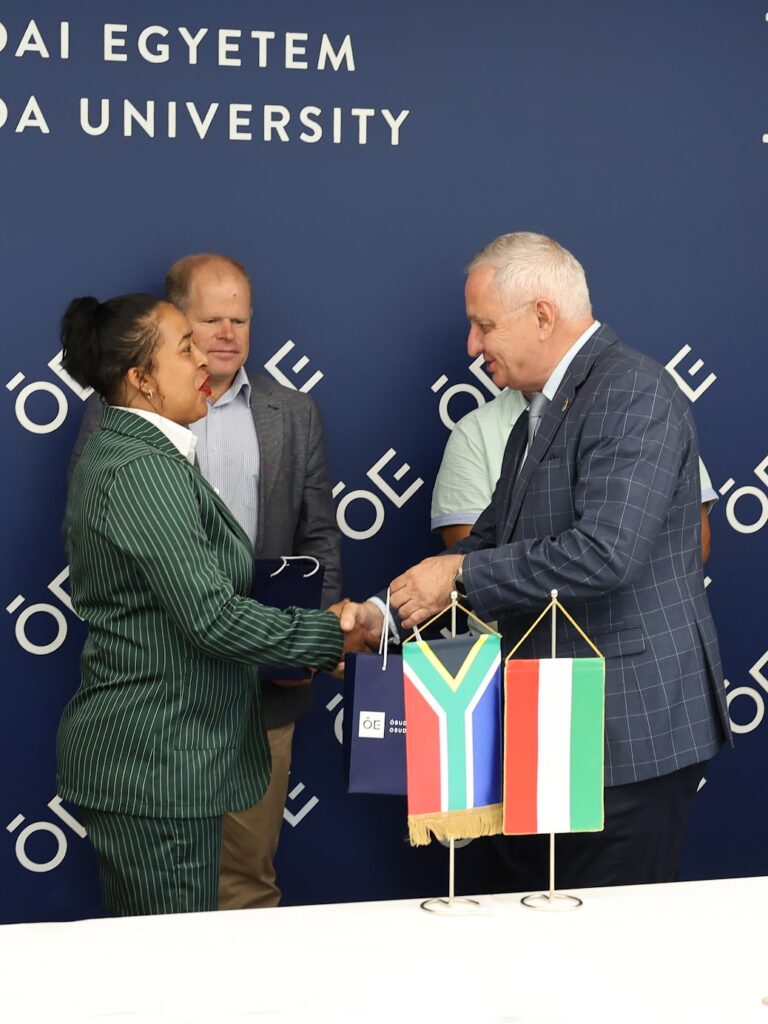
Between 8 and 13 June 2026, Óbuda University hosted a three-member delegation from the Faculty of Military Science of Stellenbosch University, South Africa, as part of the ongoing effort to further strengthen the long-standing academic partnership between the two institutions established in 2019. The delegation consisted of Capt. (Navy) Graeme Wesley Plint, Lt. Col. Audrey Rozanne Lawrance, researcher, and Dr. Hendrick Snyders, senior researcher. The visit was coordinated by Prof. János Besenyő, Head of the Africa Research Institute at Óbuda University.
During the first day of the professional programme, the delegation visited the Donát Bánki Faculty of Mechanical and Safety Engineering, where they were welcomed by Dean Dr. habil. Tibor Farkas. The guests received comprehensive information about the faculty’s educational and research activities, the operation of the Innovation Parks, and the programmes offered by the Doctoral School on Safety and Security Sciences. Members of the South African delegation also delivered presentations on their respective research fields to faculty members.
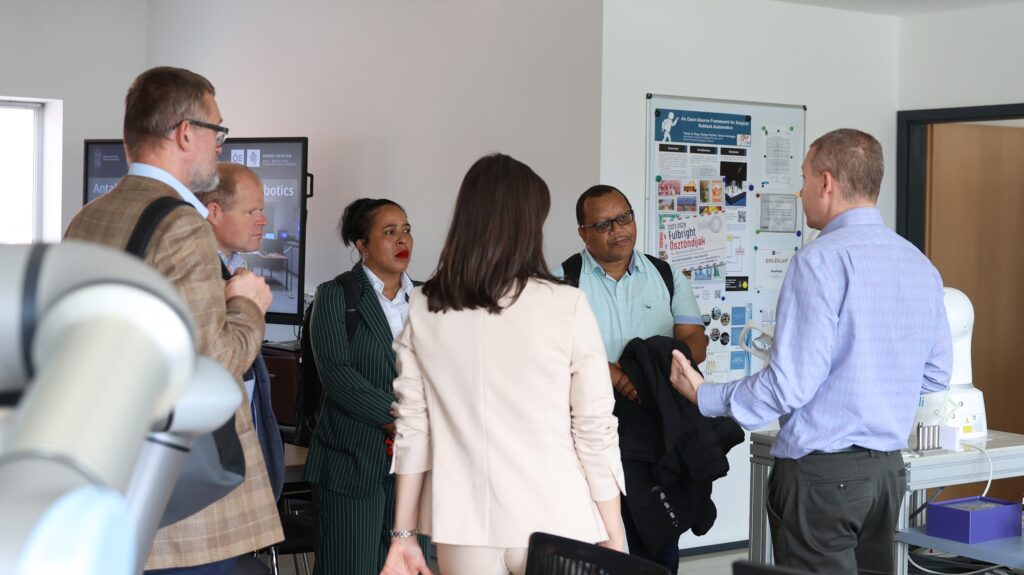
On the second day, the visitors explored Óbuda University’s robotics laboratories under the guidance of Vice-Rector Professor Péter Galambos. They also attended a university presentation hosted by Vice-Rector Professor Zoltán Rajnai, which provided an overview of the institution’s English-language programmes, international mobility opportunities, and doctoral schools. In an online session, Péter Balogh introduced the objectives and opportunities associated with the Diana programme. The campus tour and subsequent informal discussions offered further opportunities to identify areas for future collaboration.
The partners also reviewed the achievements of their cooperation over recent years and discussed concrete plans for future joint initiatives. Since 2019, the partnership between Stellenbosch University and Óbuda University has resulted in the organisation of seven international conferences, the publication of two academic books, and collaborative editorial work supporting Scientia Militaria and the Journal of Central and Eastern European African Studies (JCEEAS). Both institutions expressed their commitment to expanding cooperation in the fields of security studies, military sciences, and international research projects.
The professional programme was complemented by cultural activities, allowing the South African guests to gain insight into Hungary’s rich historical and cultural heritage, including a visit to the town of Szentendre. The visit further strengthened the scientific and cultural ties between the two universities and laid the foundation for future successful collaborative initiatives within this strategic international partnership.
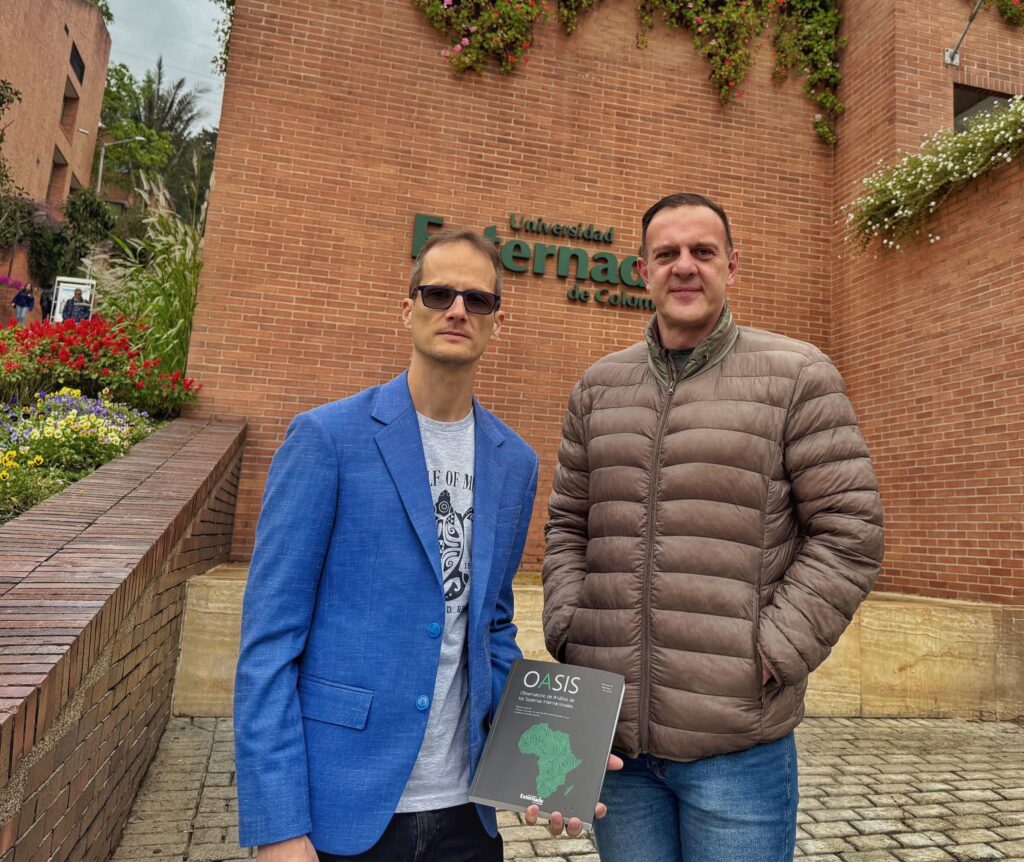
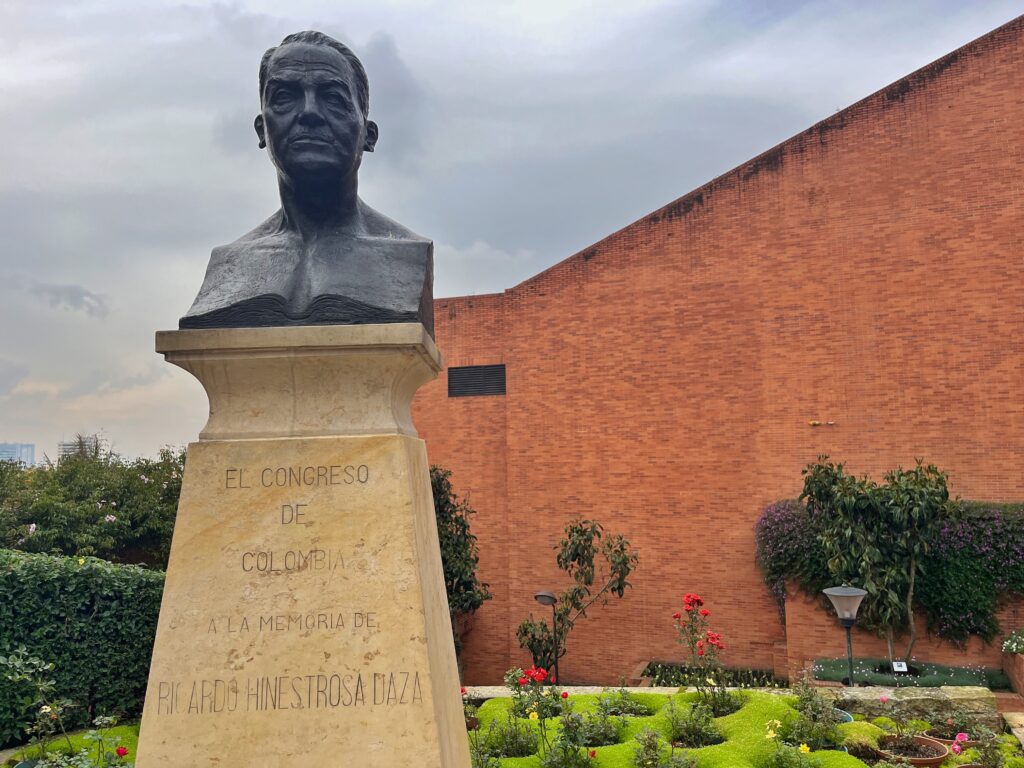
Seven months after officially launching our collaboration with the Observatory of Analysis of International Systems (OASIS) at Universidad Externado de Colombia’s Faculty of Finance, Government and International Relations, a number of meetings took place last week in Bogotá.
Dr. David Vogel, Deputy Head of the Africa Research Institute met with Prof. Jerónimo Delgado-Caicedo, Head of the OASIS Research Group and Editor-in-Chief of the OASIS Journal to discuss the next steps in the growing institutional partnership. Talks covered the deepening of institutional cooperation, upcoming events, and potential exchanges of academic staff and students. The conversation then turned to the strategic dimension, exploring the significance of Africa and the Africa strategies of both Hungary and Colombia. The meeting concluded on a symbolic note, with both parties exchanging copies of their respective scientific journals – JCEEAS and OASIS.
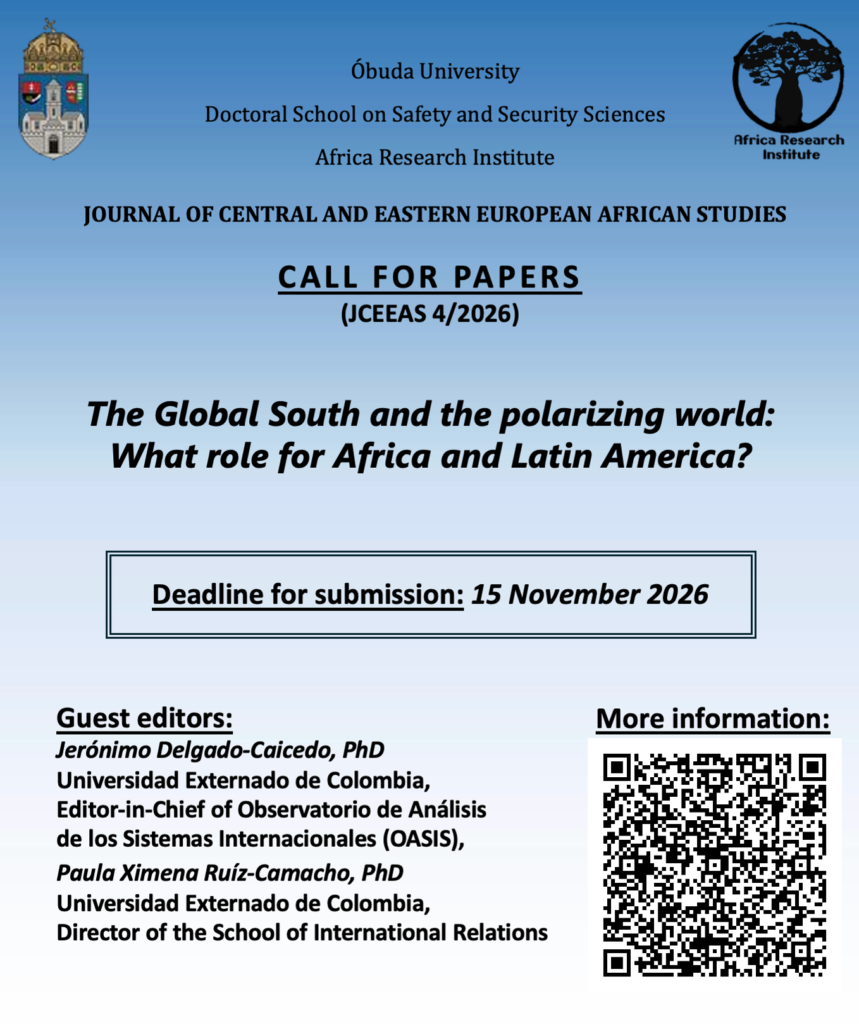
You can find the Call for Papers for the joint issues of the two academic journals below.
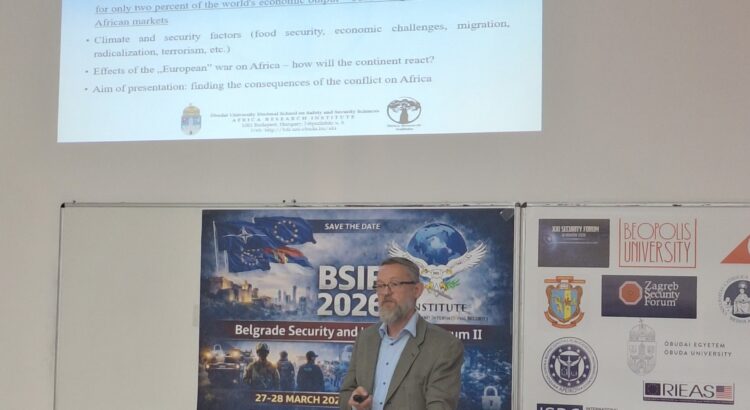
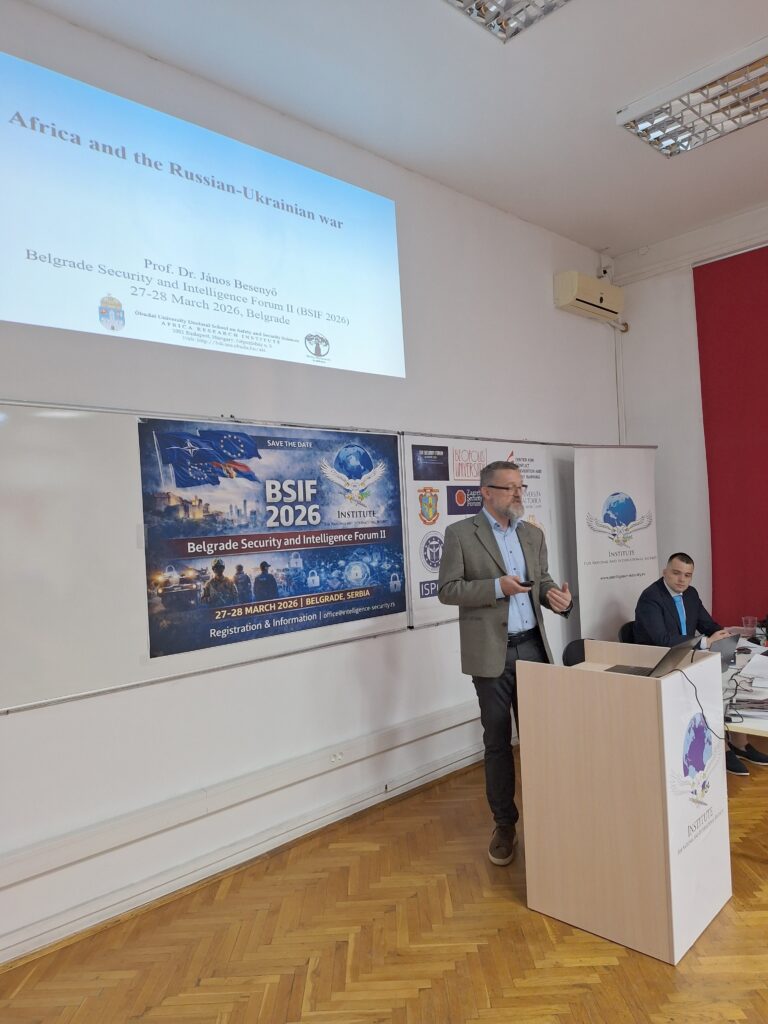
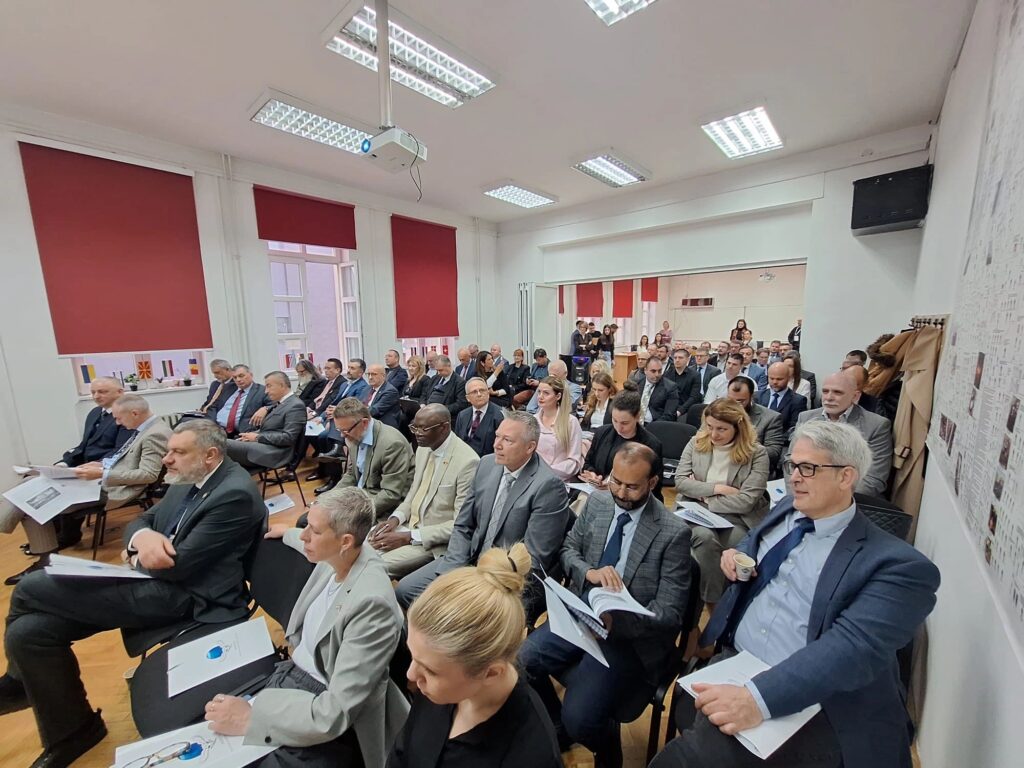
The Belgrade Security and Intelligence Forum II (BSIF 2026) was held on 27–28 March 2026 in Belgrade, organized by the Institute for National and International Security (INIS). The closed-door professional event brought together selected security and intelligence experts, diplomats, academics, and senior military and law enforcement professionals.
Key topics of the Forum included hybrid threats, cognitive warfare, the security applications of artificial intelligence, terrorism in the digital domain, and the security implications of migration. Regional discussions focused on the South-East Mediterranean, the Indo-Pacific, Eastern Europe, and the current situation in Iran.
BSIF 2026, which featured presentations by ambassadors, high-ranking military officials, and internationally recognized scholars, was organized in broad cooperation with international institutional partners. These included the Center for Conflict Prevention and Early Warning (Romania); the University of Public and Individual Security “Apeiron” (Poland); the Faculty of Security in Skopje (North Macedonia); the Zagreb Security Forum (Croatia); the International Security and Partnership Centre (Ukraine); Beopolis University (Serbia); the Faculty for Security and Protection (FSP) and other academic institutions from the Western Balkans; the Research Institute for European and American Studies (Greece); Università Cattolica del Sacro Cuore (Italy); and the Krakow Security Forum (Poland). Óbuda University was represented by Prof. Dr. János Besenyő, Head of the Africa Research Institute.
Speakers – BSIF 2026
The following speakers and their respective positions participated in the Forum:
Prof. Dr. Darko Trifunović – Director of the Institute for National and International Security (INIS), Serbia
H.E. Dr. Oleksandr Lytvynenko – Ambassador Extraordinary and Plenipotentiary of Ukraine to the Republic of Serbia
Prof. Dr. Vladimir Tomašević – Rector, Beopolis University, Serbia
Brig. Gen. (Ret.) Mario Greco – Executive Director, Global Foresight Strategies – Europe; former NATO official, Italy
Rear Admiral (Ret.) Massimo Esposito – General Manager, AFCEA Europe; former NATO official, Italy
Prof. Dr. Iulian Chifu – President, Center for Conflict Prevention and Early Warning; Professor, National Defence University / SNSPA, Romania
Prof. Dr. Jowanka Jakubek-Lalik – Associate Professor of Law, University of Warsaw, Poland
Representative of the Embassy of Israel in Serbia – Diplomatic representative
Prof. Dr. Marco Lombardi – Full Professor, Università Cattolica del Sacro Cuore; Director, ITSTIME Research Center, Italy
Prof. Dr. John M. Nomikos – Director, Research Institute for European and American Studies (RIEAS), Greece
Prof. Dr. Juliusz Piwowarski – Rector, University of Public and Individual Security “Apeiron”, Poland
Prof. Dr. Jagannath Panda – Head, Stockholm Center for South Asian and Indo-Pacific Affairs (ISDP); Senior Fellow, HCSS, Sweden/Netherlands
Prof. Dr. Nikola Dujovski – Professor, Faculty of Security, Skopje; Head of Police Sciences Department, North Macedonia
Prof. Dr. Igor Izhnin – Associate Professor, Ivan Franko National University of Lviv, Ukraine
Prof. Dr. Aleksandar Ivanov – Full Professor, Faculty of Security, Skopje; Head of Research Center, North Macedonia
Prof. Dr. János Besenyő – Professor, Óbuda University; Head of Africa Research Institute, Hungary
Prof. Dr. Branislav Kováčik – Dean, Faculty of Political Science and International Relations, Matej Bel University, Slovakia
Prof. Dr. Oliver Andonov – Professor of Security Studies, North Macedonia
Prof. Dr. Jan Goldman – Professor, The Citadel; Editor-in-Chief, International Journal of Intelligence and CounterIntelligence, USA (video presentation)
Prof. Dr. Gordan Akrap – Associate Professor, University of Zagreb; Vice-Rector, Croatian Defence Academy, Croatia
Dr. Jean-Victor Maublanc – Professor of Public Law, France
Research Fellow Rene D. Kanayama – Senior Researcher, ITSTIME, Università Cattolica del Sacro Cuore, Italy
Prof. Dr. Marijana Musladin – Professor, University of Dubrovnik, Croatia
Roško Marko – Researcher, Croatia
Dr. Nikolina Hazdovac Bajić – Assistant Professor, Croatia
Prof. Dr. Rastislav Kazanský – Professor, Matej Bel University, Slovakia
Prof. Dr. Thomas Wegener Friis – Professor, University of Southern Denmark; Director, Center for Cold War Studies, Denmark
Prof. Dr. George S. Oreku – Research Professor in Cyber Security & Information Systems, Tanzania
Dr. Miad Nakhavali – Analyst of Middle Eastern Politics; Founder, Middle East Analitika
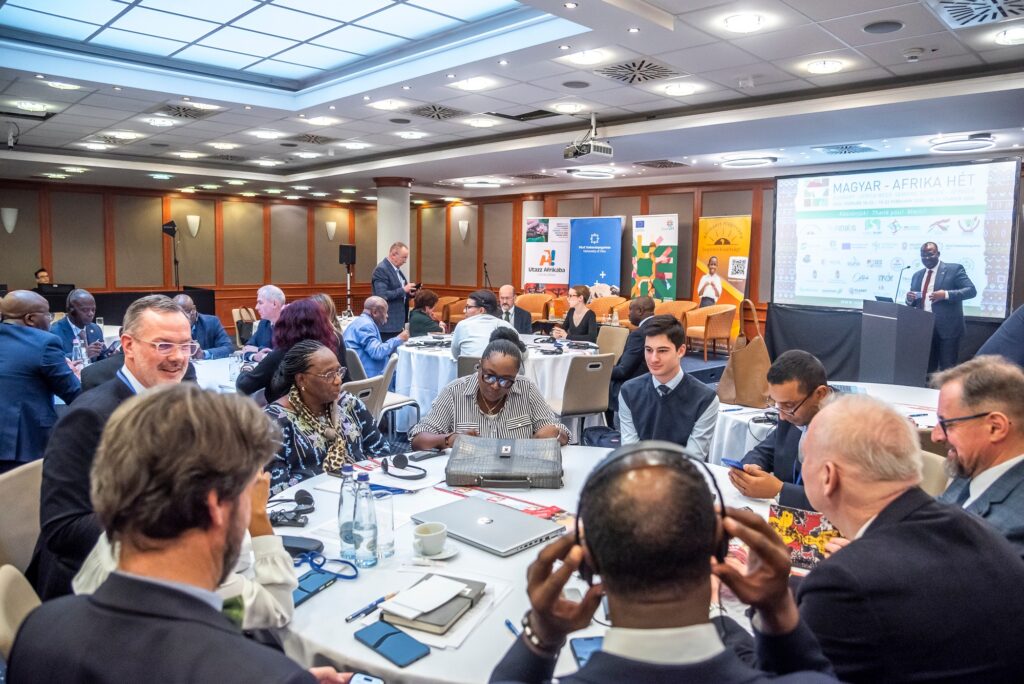
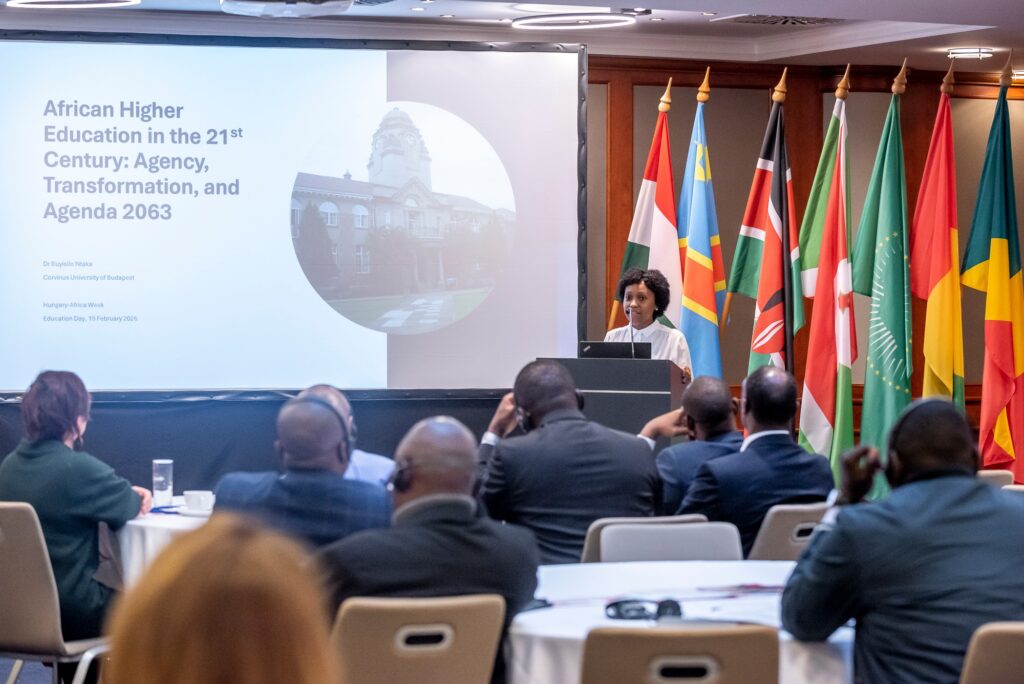
The Hungary–Africa Week was held for the third time, offering visitors the opportunity to attend exhibitions as well as cultural and scientific events. A particularly engaging program was the Education Day, where representatives of African and Hungarian higher education institutions met and shared their experiences with one another and with the audience. Among the speakers was Dr. Buyisile Ntaka, a researcher at the Africa Research Institute of Óbuda University and an associate professor at the Department of World Economy of Corvinus Universityof Budapest.
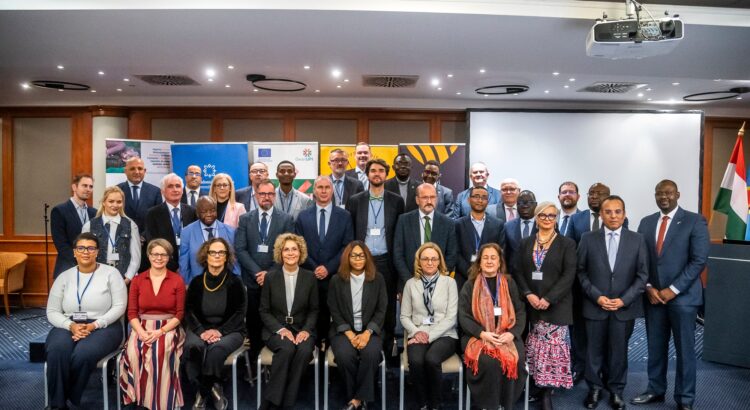
During the week, on 19 February, the 2nd Hungarian–African Rectors’ Conference took place at the Danubius Hotel Hungaria in Budapest. The event brought together leaders and lecturers from Hungarian and African universities, higher education experts, ministerial and university decision-makers, as well as representatives of various foundations and NGOs to discuss key issues related to higher education. At the Rectors’ Conference, the Rector of Óbuda University, Prof. Dr. Levente Kovács, was represented by Prof. Dr. János Besenyő, Director of the Africa Research Institute, who noted that the conference proved highly beneficial for the participants.
Based on the cooperation between the African Research Institute (ARI) and the Universidad Externado de Colombia, it has been decided to publish parallel thematic issues in both JCEEAS and its Colombian counterpart, Observatory for the Analysis of International Systems (OASIS), an indexed, peer-reviewed journal.
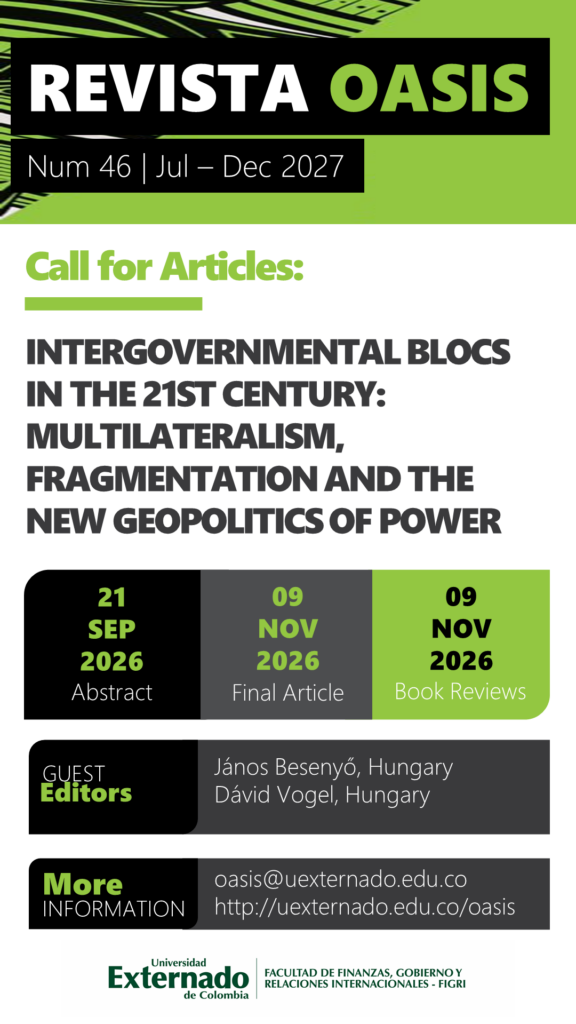
Based on the cooperation between the African Research Institute and the Universidad Externado de Colombia, a decision has been made to publish joint thematic issues in both JCEEAS and its Colombian counterpart, the Observatory for the Analysis of International Systems (OASIS), an indexed, peer-reviewed journal. Accordingly, ARI has received a request from the Editor-in-Chief of OASIS inviting Prof. János Besenyő and Dr. Dávid Vogel to serve as guest editors for the second issue of 2027 (OASIS No. 46) under the theme:
“Intergovernmental Blocs in the 21st Century: Multilateralism, Fragmentation, and the New Geopolitics of Power“
Deadline for abstracts and author bio: 21 September 2026.
For more information, see the call for papers attached!