New prospects for partnership in Ghana: Prof. Dr. János Besenyő agreed joint projects and research cooperation in Accra

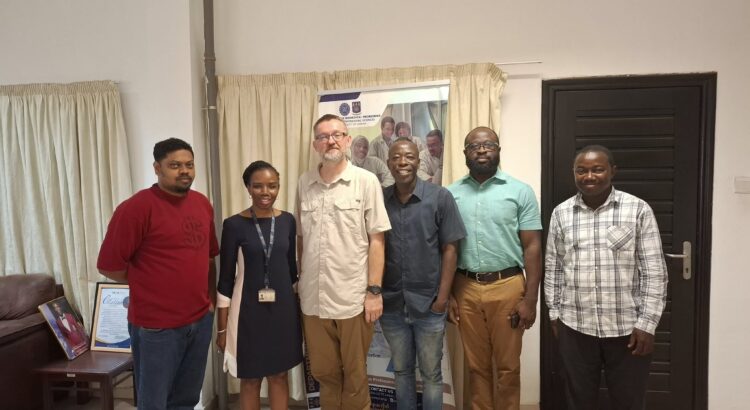
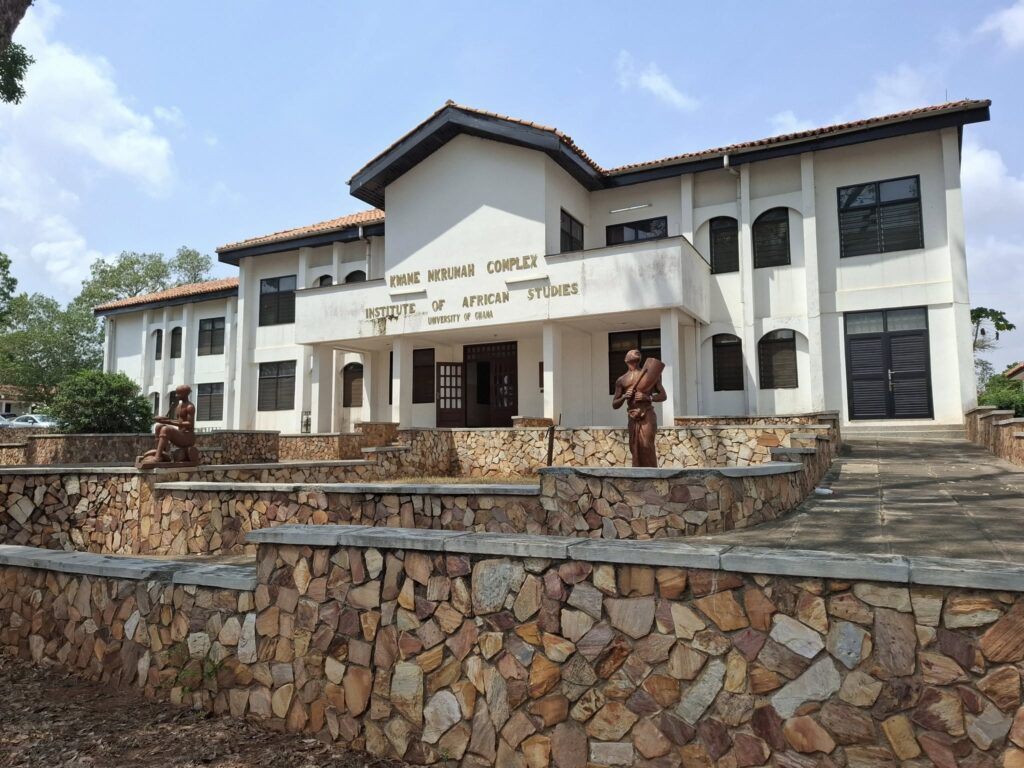
As part of the Erasmus program, the Head of the Africa Research Institute, Prof. Dr. János Besenyő, spent a week in Accra, the capital of Ghana, where he visited several facilities of the University of Ghana (Institute of African Studies, College of Humanities, Department of Economics, Department of Biomedical Engineering). The university is considered one of the top universities not only in the region but also on the continent.

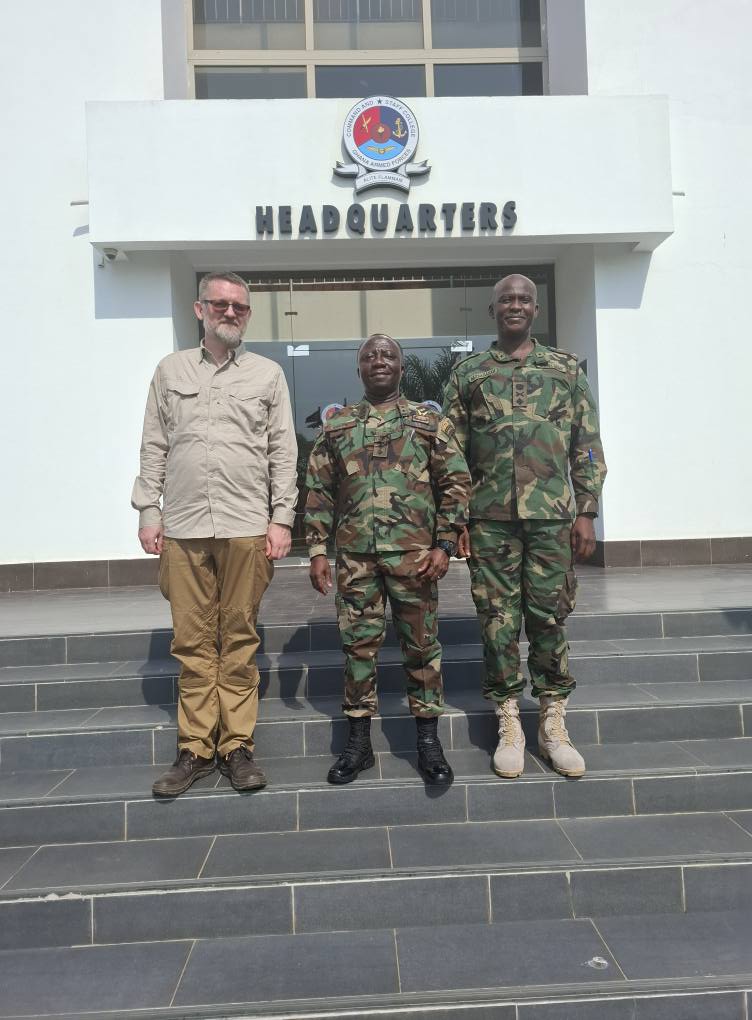
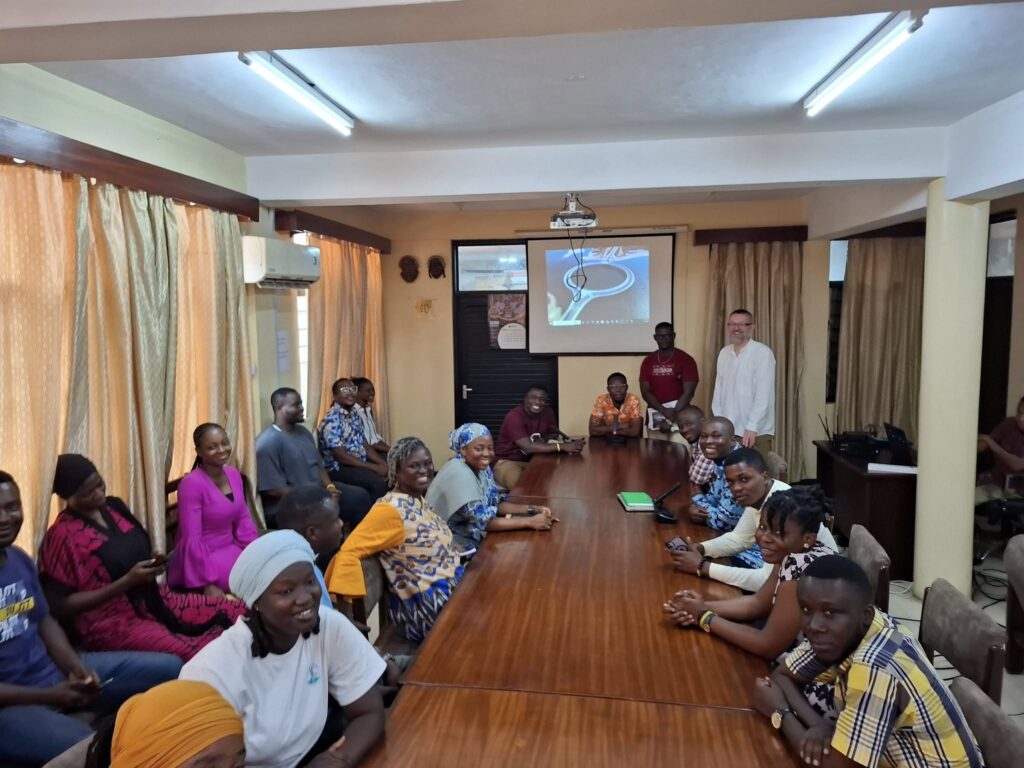
During his visit, consultations with university representatives resulted in various prospecting collaborations and joint projects. Professor Besenyő also gave lectures to students, sharing knowledge about Hungary’s role in African peace operations (1989–2025). It was a special honor that Professor Besenyő was invited by Major General Matthew Essien, the Commander of the Ghana Armed Forces Command and Staff College, with whom he discussed joint research opportunities and publication collaborations, particularly within disciplines of security science and security policy. Among other things, General Essien indicated that the Ghanaian Military Academy would join the international security conference organized by the Africa Research Institute and the University of Stellenbosch in South Africa, which this year has been held for the fifth year.

Below is an excerpt from Professor Besenyő’s personal report, which he shared with the public upon his return:

“During my visit at the Headquarters, it turned out that I had served alongside several Ghanaian soldiers in my African peace operations who were also in contact with Major General Matthew Essien and his deputy, Brigadier General Tim Bat. The most famous of them was Lieutenant General Henry Kwami Anyidoho, who was my commander in Sudan during the AMIS (African Union Mission in Sudan) operation in 2005, and with whom I became good friends there. General Anyidoho had previously served as the deputy commander of the UNAMIR (United Nations Assistance Mission for Rwanda) mission during the Rwandan genocide. He personally refused the order to leave the country and masses of vulnerable civilians during the genocide, putting his military career at risk. Thanks to his involvement, more than a thousand Rwandan civilians survived the massacres. In his book Guns over Kigali, he speaks with honesty about the genocide and the UN mission, discussing both its successes and failures.

In recent years, under the Stipendium Hungaricum program, many young Ghanaians have studied in Hungary, while the recently reopened embassy in Accra promotes Hungary through cultural programs. During my visit, I had the opportunity to meet with Professor Ildikó Csajbok-Twerefou, who has been teaching at the University of Ghana for over 16 years and played a key role in establishing cooperation between the university and several Hungarian higher education institutions. I also met with Katalin Torda, who, after emigrating in the 1970s, established one of the largest and most renowned pearl trading businesses in Ghana. Pearls have a significant, millennia-old history in African societies, as they are not only used as decorative elements but also considered valuable assets. By purchasing hundreds of years-old European, African, and Middle Eastern pearls, and due to her tireless and precise work, she has become an internationally recognized expert in the field. I highly recommend visiting her business to anyone traveling to Ghana.”
CALL FOR PAPERS: “Sahel: A turbulent region of increasing importance”

This special issue aims to gather thought-provoking studies and new researches in topics such as population growth, migration, refugees and IDPs, poverty, shortages of food and potable water, human rights issues, Franceafrique, political instability, corruption, transnational terrorism, armed groups, insurgencies, peace support operations, lack of infrastructure, transhumance issues, desertification, droughts, climate change, child marriage, religious and interethnic tensions, besides others. 

Papers will be published in a special JCEEAS issue (for more information: https://jceeas.bdi.uni-obuda.hu/index.php/jceeas/issue/archive)

Enclosed please find additional information.

Deadline: 15 November 2024, with a short bio and abstract

Publication date: March 2025

Guide for Authors: 

https://jceeas.bdi.uni-obuda.hu/index.php/jceeas/instructions

For more information, contact: Dr. David Vogel Editor of the Issue on behalf of the editorial team of JCEEAS, vogel.david@bgk.uni-obuda.hu

The Journal of Central and Eastern European African Studies (JCEEAS) is a double-blind peer review academic journal published quarterly by the Africa Research Institute of Ó buda University in Budapest. Its open-source philosophy and international character of the editorial team ensures that it reaches a wide audience interested in contemporary African affairs and studies. 

The journal is open-source and there are no publishing fees.

Chadian participants have just completed our Humanitarian Response Manager (HRM) training course

Last Saturday, participants of the first Chadian group who had been enrolled in our Humanitarian Response Manager training course at Óbuda University, Bánki Faculty have just completed and passed the final exam. Working in the Chadian refugee management system, they can now continue their work with an internationally recognised degree.

Congratulations on passing the exams!

International conference: „Counter-Terrorism, Technology and Development in Africa” (CTD2024)

The Africa Research Institute of the Doctoral School of Safety and Security Sciences at the University of Óbuda and the Center for Military Studies at the University of Stellenbosch, South Africa (CEMIS) organize a hybrid scientific conference on 19 September 2024 entitled ‘Counter-Terrorism, Technology and Development in Africa’ (CTD2023). In the four sections of the symposium, the speakers touch upon current issues in the fields of human security, socioeconomics, technological development and cybersecurity, and leadership and corporate governance. Submitted papers will be included, among others, in the next issues of the quarterly scientific journal of the Journal of Central and Eastern European African Studies, which is listed by the African Research Institute.

The annual event is part of the cooperation between the Bánki Donát Faculty of Mechanical and Security Engineering, University of Óbuda and the Center for Military Studies, University of Stellenbosch that has been signed in April 2021.

Proposals for papers are hereby invited from interested researchers, scholars, practitioners and policy-makers in the defence and security fields for the upcoming conference. The deadline for abstracts and bio: 25 July 2024.

  • Panel 1: Human security
  • Panel 2: Socio-Economic development
  • Panel 3: Technology and cyber-security
  • Panel 4: Leadership and corporate governance

For further information, please check the document attached:

Mali: Insecurity and instability are key determinants of terrorism

In recent years, the number of violent incidents in Mali has increased exponentially, causing the deaths of many soldiers and civilians. The increase in the influence and activity of terrorist organizations and the further exacerbation of the humanitarian and security crisis in the country fundamentally prevents the reaching of lasting political, economic and social peace. Effective responses to the challenges are highly dependent on international support.

A new article by Prof. dr. János Besenyő and dr. Scott N Romaniuk is available on the website of the IDHUS Institute, which provides humanitarian situation reports and broader geopolitical analyses as well.

The article is available by clicking on the following link: https://idhus.org/mali-como-la-inseguridad-la-incertidumbre-y-el-caos-fomentan-el-terrorismo/

The article is also available on The Conversation: https://theconversation.com/mali-comment-linsecurite-lincertitude-et-le-chaos-favorisent-le-terrorisme-230323